
Weeknotes: February 9–13, 2026
Monday, February 9
On the television, a hulking blue-clad figure slips down the mountain, video drones screaming overhead, capturing the bird's eye view of his 80mph descent. "He's loose as a handful of sand," says color commentator Steve Porino. At six feet tall, Italian skier Dominik Paris is a mountain of a man, nicknamed "King of Bormio" for the number of World Cup wins (seven) he's claimed in this locale. He's also the frontman for groove metal band Rise of Voltage. Despite his dominance in alpine skiing, he's never made the podium in any of his four previous Olympic appearances. This is his fifth and final shot. He takes home the bronze.
Tuesday, February 10
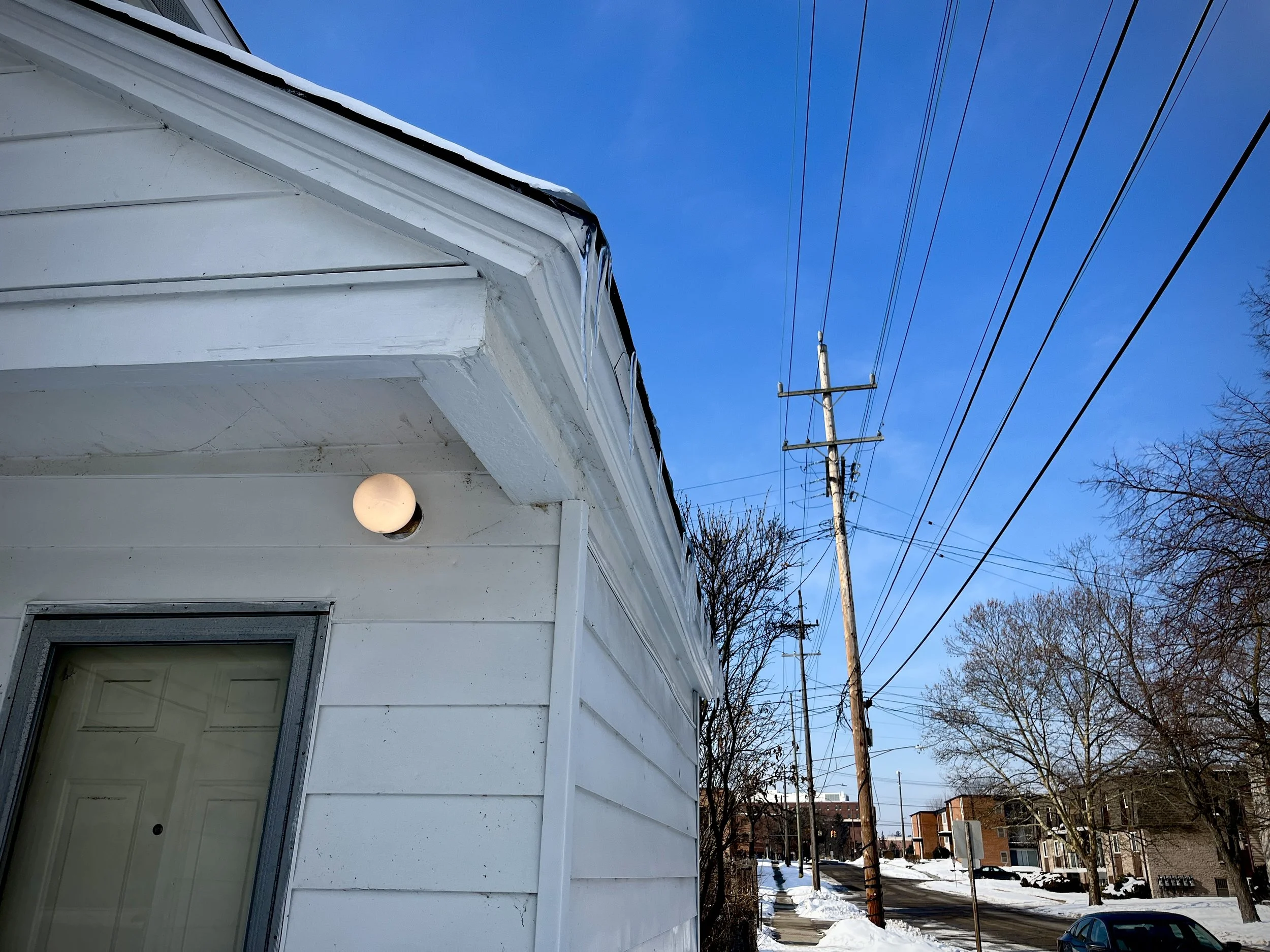
It's the first thaw of the year — Islay reads it like a newspaper, sniffing stories out of every snowbank. My face is drawn upward by the sun, revealing middle distance details of my neighborhood. A small globe light in pearly contrast against white siding, a garland of dried orange slices decorating an upper window, thick icicles hung from old poorly-insulated houses.
At home I listen to Waldo de los Ríos' extravagant pop arrangements of Beethoven and Mozart. This type of classical-pop crossover is such a relic of the late-'60s and early-'70s, but it hits the spot right now. The sun is shining and the Tigers just signed Justin Verlander to a one year contract. He'll be 43 at the start of the season, but I think he's got some wins left in his arm. Regardless, I'll be thrilled to see him in a Detroit uniform again.
I first saw Verlander pitch during the 2005 All Star Futures Game at Comerica Park. A year later he helped send Detroit to the World Series for the first time in 22 years. On June 12, 2007, I sat in the stands mesmerized, watching him pitch a no-hitter against the Brewers — a highlight of my sport-going life. When the final out was made, they played Randy Newman's fanfare from The Natural over the P.A. and all my childhood baseball fantasies were activated. It was glorious. I always hoped he'd come back to Detroit.
Wednesday, February 11
In my dream I'm at a gym that is also a guitar store. I duck into a storage room with a tiny pool for skateboarding, except it's about 8" deep with a bumpy floor too textured to skate on. Next to it is a big 4" x 10" speaker cabinet with a mysterious oblong Peavey case leaning against it. I think it's a bass zither. When I step back out into the hall, the owner recruits me to stick around and help judge the Battle of the Bands that's about to begin. A nerdy teenage kid comes up to me to talk about his band. I was him once. I want to support young bands, but also resent being stuck there all night. I wake up feeling anxious.
All day I'm overwhelmed and never really catch my breath. At an intersection in the town where I used to live I watch a man carrying a white trash bag filled with returnables slip on the icy sidewalk. He sits up, looking bewildered, gathers his bag, and stands up only to fall right back down. Poor guy. It's a classic pratfall that might be funny if I didn't feel so blue. Mostly, I just feel bad for him. We've all been there. He makes it safely across the street before the light turns green.
Thursday, February 12
Out this week is a reissue of Live at Sin-é, Jeff Buckley's debut EP, which was a formative record for me. It's basically just the expanded two-disc version Columbia released in 2003 pressed onto vinyl for the first time, but I thought its revival warranted an updated review. Apart from discovering new artists, the best part of my job is occasionally getting to revisit and write about the music that influenced me.
I was a senior in high school the year Jeff Buckley hit. Ever since I got my driver's license in January 1993, I'd been performing almost every weekend in cafes around Southeast Michigan, developing my chops, learning how to sing in front of an audience, and playing from a disjointed catalog of covers that included R.E.M., Violent Femmes, Donovan, Neil Diamond, and a crowd-pleasing, but embarrassingly overwrought rendition of Deee-Lite's "Groove is in the Heart."
I first heard Buckley's debut album, Grace, at the listening station kiosk at Tower Records. Captivated, I bought it and quickly worked my way backward to his only other release, the four-song EP, Live at Sin-é. His fearlessness and wild abandon as a solo performer really struck a chord with me, especially his ten-minute version of Van Morrison's "The Way Young Lovers Do." I'd never heard that song before, so I can also credit Buckley with turning me on to Astral Weeks. The way he improvised and played around the edges of his source material was revelatory to me. I was 17, a totally unformed entity. Of course, I immediately began aping his wild scat vocal style, taking my fledgling songs on adventurous flights of fancy to places they never should have gone. I didn't have much tact or nuance, but he inspired in me a confidence to just let go and see what happens.
When Buckley and his band came through Ann Arbor on Halloween 1994, I saw them at the Ark, a venue where I'd been working my way up through the open mic ranks. On stage, he was as thrilling as I'd hoped and when the set was over, he graciously opened up his dressing room door. As I stood in line, I observed his behavior. He was so friendly and warm, genuinely concerned that he remain available to anyone who wanted to talk to him. In my poet shirt and cape — it was Halloween, I was dressed as Hamlet — I stepped up to praise my hero and walked away with an autographed gig flyer and a lesson in diplomacy.
The Buckley vocal affectation remained in my own voice for a little too long, but his adventurousness and attention to stagecraft have stuck with me my whole career. I was gutted three years later when I heard the news of his death.
Friday, February 13
I run up the hill on East Forest, dashing puddles and ice patches, listening to an old playlist from 2018. Luluc's beautiful "Spring" plays like a harbinger and Hayley Sabella's "Forgive the Birds" gives me shivers. I don't need fast music to keep me running.
I'm listening to Alan Parsons Project's soft rock classic "Time" when I see a familiar figure approaching on the opposite side of the street. It's Fred. I should let him pass, but I'm currently mulling over the knotty issue of buying new studio gear and he's a great guy to talk to. I hail him and we chat for about five minutes on the sidewalk about which DAWs (digital audio workstations) we use and the merits of changing things up. My ancient equipment, with its outdated software is nearing an extinction event and I need to find a new path forward. Do I stay stay with Pro Tools, the only DAW I’ve ever known? Fred’s advice is helpful. By the end of the run, I've decided I might be ready to date other DAWs.